

Blog
Lambskin, Sheepskin, Cowhide and Goatskin: Which Leather for Which Jacket

Most leather jacket listings say “genuine leather” and stop there. That tells you the hide came off an animal and nothing else. Which animal changes how the jacket hangs, how heavy it feels by the end of a day, how soon it creases and how long it lasts. Here is what separates the hides we work with, and which one belongs on which jacket.
Lambskin
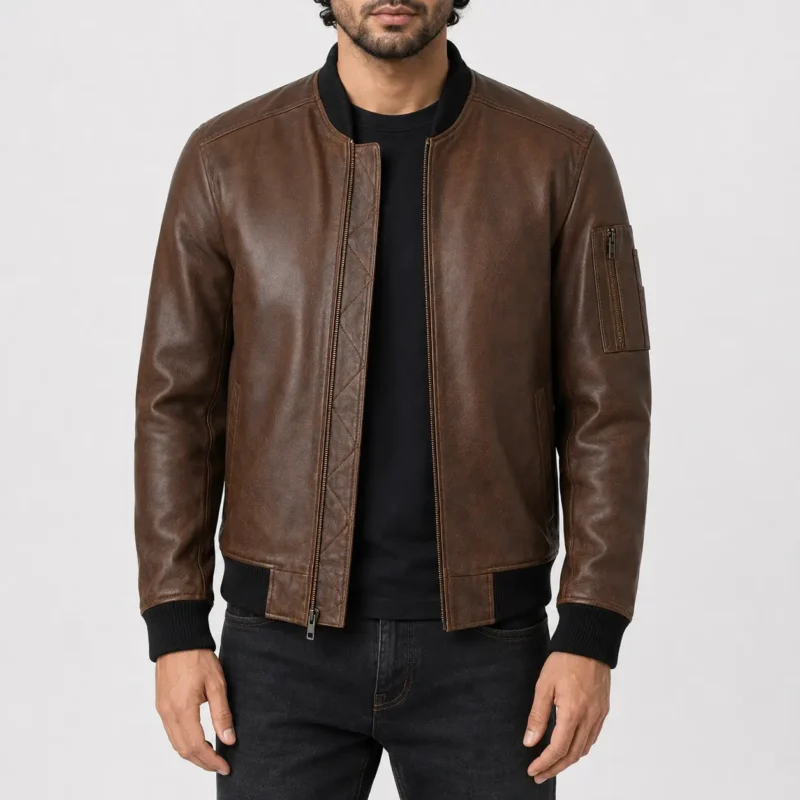
Lambskin comes off a young sheep, so the hide is thin, usually under a millimeter. That thinness is the whole point. It drapes instead of standing away from the body, the grain is fine enough to read as smooth rather than textured, and it is soft the first time you put it on rather than after a month.
The trade is abrasion. A lambskin jacket marks more easily than a cowhide one and will show a scuff where a heavier hide would shrug it off. That matters if the jacket is going on a motorcycle. It matters much less if the jacket is going to work.
Lambskin suits close cuts, where the leather has to follow the body rather than hold its own shape. Fifteen jackets here name it in their specifications, mostly bikers, cafe racers and bombers, among them the Alden cognac brown bomber.
Sheepskin
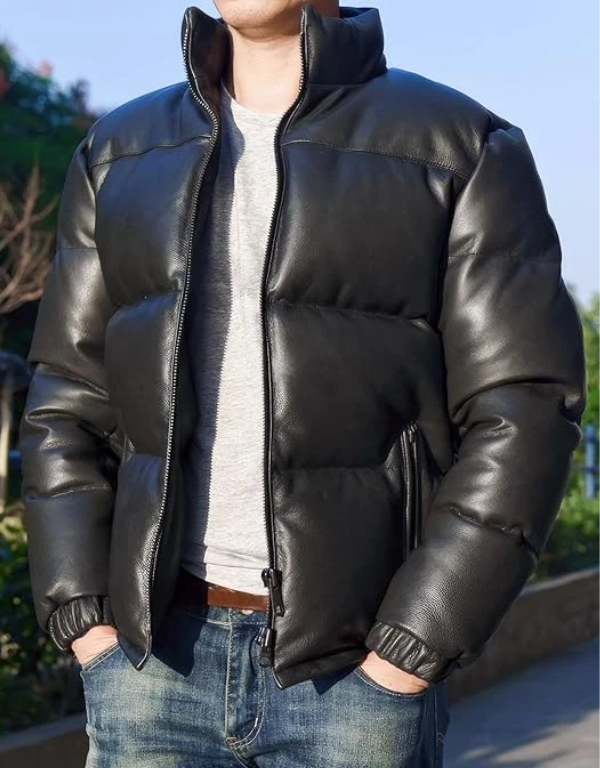
Same animal, older. The hide is thicker than lambskin and a little firmer, but it is still a soft leather by any reasonable standard. You give up a small amount of drape and get back some body, and a jacket that holds its line better through the shoulders.
It is the most common shell we name, on twenty-six jackets, and it sits under most of the flight and aviator patterns.
Shearling
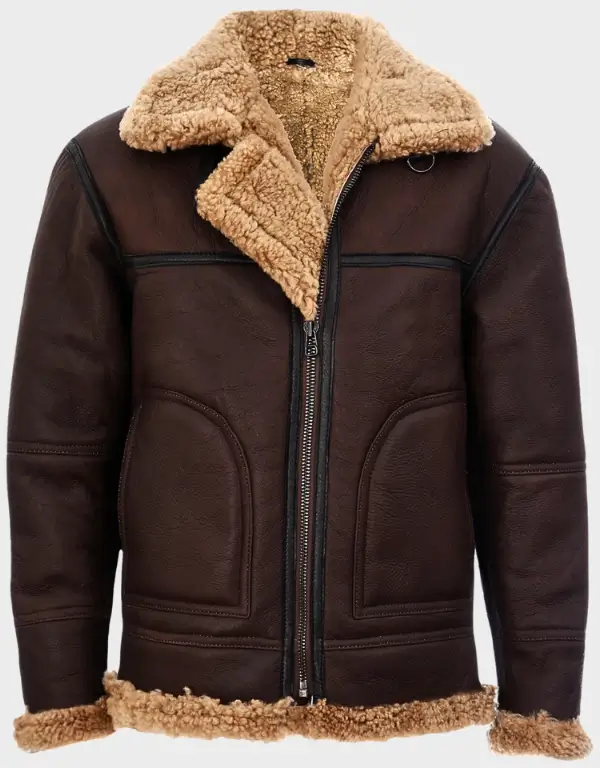
Shearling is not a separate animal. It is sheepskin tanned with the wool still on, so one side is leather and the other is fleece. That is why a shearling jacket needs no lining: the lining grew there.
Two things follow. It is the warmest thing in the range by a wide margin, and it is the heaviest. A B-3 in full shearling is a winter coat that happens to look like a jacket, not a three-season piece. Sizing changes too, because the wool takes up room inside. Buy for the shoulders and leave space, rather than sizing down for a close fit.
Twenty-seven jackets are lined with it, across men’s shearling jackets and women’s shearling jackets.
Cowhide
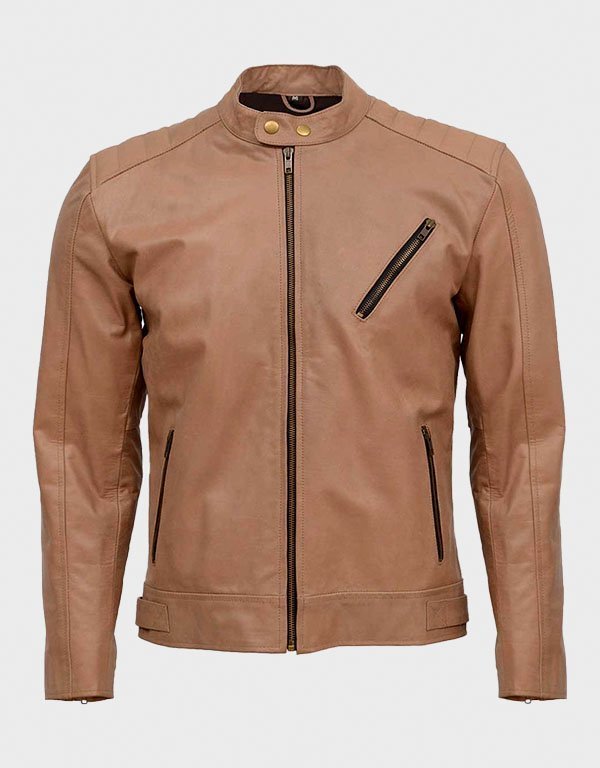
The heaviest and the toughest. A cowhide jacket is stiff out of the box and stays that way for a while. What you get for the wait is a jacket that takes a decade of wear, holds a hard line at the shoulder and keeps the creases you put in it.
This is the traditional motorcycle leather, and it is the right answer if the jacket is going to be worn hard. It is the wrong answer if you want something that feels broken in on day one. Four jackets here name cowhide, including the light brown biker.
Goatskin
Goatskin has a pebbled grain you can see and feel, and an unusually good strength-to-weight ratio: light in the hand, hard to tear. It is why goatskin and horsehide were the usual choices for military flight jackets like the A-2.
It is the rarest hide here. One jacket names it, the women’s mocha suede biker, and there it is finished as suede rather than left smooth. Our own A-2 is cut in cowhide, not goatskin, which is worth saying plainly because the pattern is usually associated with the latter.
Suede is a finish, not a hide
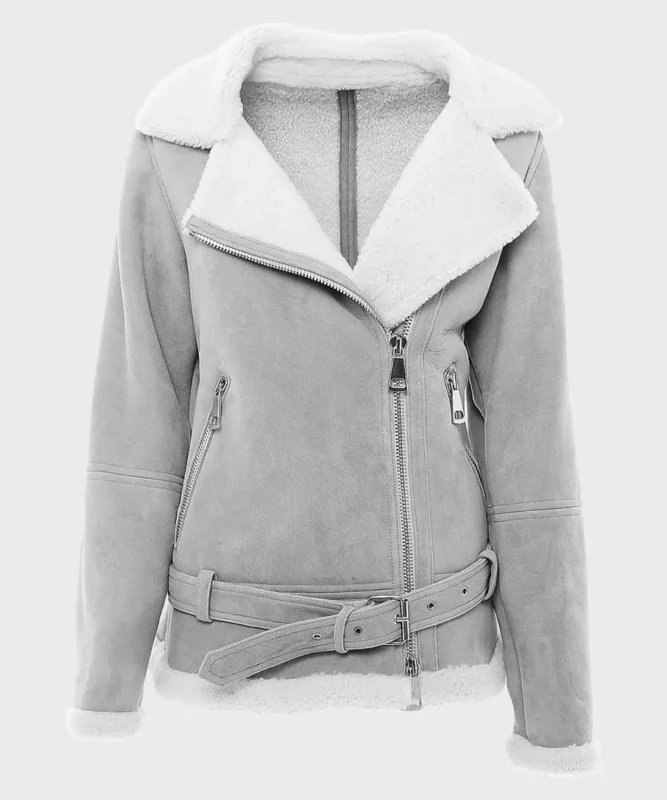
Suede is what you get when a hide is buffed to raise a nap. It can be made from lamb, sheep, goat or cow, so the word tells you about the surface and nothing about the animal. Four pieces here are suede, including this gray suede shearling jacket.
It is softer to the touch than smooth leather and far less forgiving of water and oil, because there is no sealed grain surface keeping them out. Treat it as a dry-weather jacket, or protect it before you wear it.
The words on the spec list
A few terms turn up in specifications and are worth reading properly.
- Full-grain means the outer surface of the hide was left alone, scars and all. It is the strongest part of the skin, and it patinas rather than wearing out.
- Top-grain means that surface was sanded level and refinished. More uniform, slightly less durable.
- Aniline is a dye that soaks through rather than sitting on top as a pigment coat. The natural markings stay visible, which is the point, and the leather breathes better.
- Nappa is not a hide either. It describes a full-grain leather finished to be particularly soft and smooth.
- Distressed is a deliberate finish that puts the wear in before you get it.
Choosing between them
The honest short version:
- Soft and light, worn over a shirt, close to the body: lambskin.
- Soft but with some structure, an all-round jacket: sheepskin.
- Cold weather, no lining needed, heavy: shearling.
- Hard wear, long life, and you do not mind breaking it in: cowhide.
- Light but strong, with a texture you can see: goatskin.
Weight is the thing people underestimate. A shearling B-3 and a lambskin bomber are not the same garment in different colors, and a jacket that feels substantial in the first five minutes can feel like work by the evening.
When the listing does not name the hide
Worth being straight about: about half our own specifications say “black leather” or “dark brown leather” without naming the animal. We are working through the catalog to fix that, because the hide is exactly what this article says it is, the thing that decides how the jacket behaves.
Until it is done, ask. The workshop knows what went into any jacket on this site, and the answer takes one email.
How the jacket gets made
Nothing here is cut before somebody orders it. The hide, the size and the pattern are all settled after the order, and the jacket is cut and stitched by hand over five to seven days.
That is also why fit is not limited to what a size chart offers. Made to measure is free on every style: send eight measurements at checkout and the pattern is drawn to your numbers instead of a standard size. If you want something about the jacket itself changed rather than the fit, that is what custom leather jackets covers.