
How to Clean a White Leather Jacket Safely
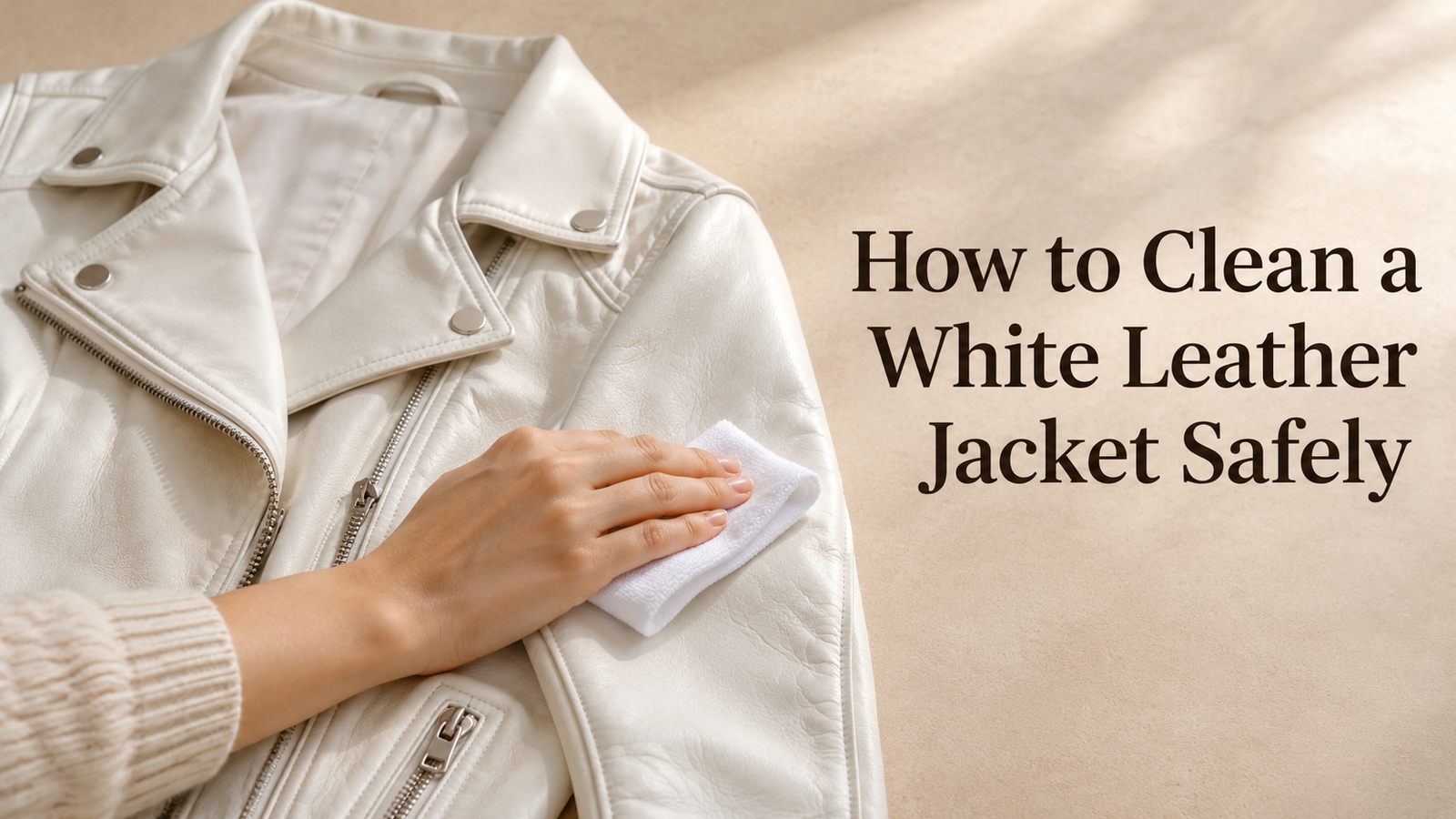
A white leather jacket can make even a simple outfit look polished. But one mark on the collar, a splash of coffee, or colour from a dark handbag can leave you wondering whether you’ll ever get it clean again.
The good news? You can often take care of light surface dirt at home with a gentle approach. In this guide, you’ll learn how to clean a white leather jacket, which stains need professional attention, and how to keep your jacket looking its best between wears.
The most important first step is knowing what kind of leather you have. A cleaning method that works for smooth, coated leather may leave a permanent mark on suede or aniline leather.
Quick Answer: How Do You Clean a White Leather Jacket?
For smooth, finished white leather, first check the care label and test a suitable leather cleaner on a hidden area. Gently remove dust with a soft, dry white cloth, then use the tested cleaner according to its instructions. Wipe away any residue as directed and let the jacket air-dry away from direct heat and sunlight. For suede, unfinished leather, stubborn stains, or a “professional clean only” label, consult a leather-care specialist.
Before You Start: Check Your Jacket’s Leather Type
White leather jackets don’t all have the same finish. Some have a protective coating, while others absorb moisture more easily. Look at the label inside your jacket or check the original product description. If you’re unsure, contact the retailer or a leather specialist before applying a cleaner.
Material or finish | Appearance | Best approach |
Finished smooth leather | Smooth, even colour; may have a slight sheen | Gentle surface cleaning with a suitable product, if the label allows |
Aniline or unfinished leather | Natural-looking surface that may absorb moisture | Consult a leather specialist before using liquids |
Suede or nubuck | Soft, velvety surface | Use a suede-specific brush or seek professional care |
Patent, metallic, or special finishes | Glossy, reflective, or textured coating | Follow the manufacturer’s specific instructions |
Faux leather | Synthetic material with its own care requirements | Follow the garment’s care label |
The finish matters because more absorbent leather can darken or stain when it comes into contact with moisture. Leather-care specialists recommend choosing products based on the material, rather than treating every jacket the same way.
Not sure what you have? Start with a dry cloth only and ask a professional before doing more. Avoid using the cleaning steps below on suede or other delicate finishes unless the manufacturer specifically recommends them.
What You’ll Need
For a white jacket made from smooth, finished leather, gather:
· Two or three clean, soft white microfiber cloths
· A leather cleaner labelled as suitable for your jacket’s finish and light-coloured leather
· A wide, padded or shaped hanger
· A leather conditioner, only if recommended for your jacket’s finish
· A soft brush for dry dust, if appropriate
Using white cloths helps you see when dirt is coming off and reduces the risk of colour transferring from the cloth to your jacket. You don’t need bleach, a hard brush, or a cupboard full of household cleaners. A simple routine is usually the better starting point.
How to Clean a White Leather Jacket: Step by Step
The following method is for light surface dirt on smooth, finished leather, provided the care label allows home cleaning.
Step 1: Read the care label
Check the label before reaching for a cloth. If it says professional leather cleaning only, follow that instruction. Also look for any guidance about water, conditioning products, or the jacket’s lining. The manufacturer may recommend a particular cleaning method for its finish.
Step 2: Test the cleaner in a hidden spot
Choose a small, discreet area, such as an inside hem or an inconspicuous section under the collar. Apply a tiny amount of cleaner as directed, then allow the test area to dry completely. Check for changes in colour, shine, texture, or stiffness. If the area looks different, stop. Even a product labelled for white leather may not suit every finish.
Step 3: Remove loose dust
Lay the jacket on a clean surface or hang it on a wide hanger. Gently wipe it with a dry white microfiber cloth. Pay attention to the collar and neckline, cuffs and sleeve edges, pocket openings, the front near the zip or buttons, and areas where a handbag strap rests. Don’t scrub. You’re lifting loose dust, not trying to polish the leather.
Step 4: Clean one small section at a time
Apply the tested cleaner to your cloth as directed on the product label. Unless the product instructions say otherwise, avoid pouring or spraying it directly onto the jacket. Gently wipe a small section using light pressure. Move to a clean part of the cloth as it picks up dirt. Work carefully around seams and details, and avoid soaking the leather. If the cleaner requires you to remove residue with a separate cloth, follow its instructions. Tip: If a mark isn’t lifting after gentle cleaning, don’t keep rubbing. You may remove the white surface finish before you remove the stain.
Step 5: Let the jacket dry naturally
Hang the jacket on a wide hanger in a well-ventilated room. Allow it to dry completely at room temperature. Keep it away from radiators, hairdryers, tumble dryers, and direct sunlight. Heat can cause the leather to dry unevenly or become stiff.
Step 6: Condition only if appropriate
Once the jacket is clean and completely dry, check whether its manufacturer recommends conditioning. If it does, use a conditioner suitable for the specific finish and light-coloured leather. Test it on a hidden area first and apply it sparingly according to the instructions. More conditioner isn’t necessarily better. Some products can change the colour or sheen, particularly on pale leather or special finishes.
Step 7: Check the result in natural light
After the jacket dries, look at it in indirect daylight. A mark that seemed to disappear while the leather was damp may still be visible. If the jacket looks clean and feels normal, it’s ready to wear. If you notice patchiness, a colour change, or a stubborn stain, stop and seek advice from a leather specialist.
Thinking about adding a fresh style to your wardrobe? Explore our off white leather jackets for an easy-to-style layer you can wear throughout the year.
How to Remove Common Marks From White Leather
White leather can pick up everything from makeup to denim dye. The right response depends on what caused the mark and how deeply it has settled.
Everyday dirt around the collar and cuffs
Collars and cuffs are often the first areas to look dull because they touch your skin and clothing. For light surface dirt on finished leather, follow the tested-cleaner method above. A gentle clean after you notice the buildup is easier than waiting until the area becomes heavily soiled. Real-life example: You wear your white jacket several times on your commute and notice a grey line at the cuffs. Start with a dry cloth, then use a suitable tested cleaner if needed. If the line remains, don’t scrub harder—ask a specialist to assess it.
Makeup and foundation marks
If makeup transfers onto the collar, gently lift any loose excess with a clean, dry white cloth. Avoid spreading it across the leather. For a small surface mark on finished leather, a tested leather cleaner may help. Oily makeup or a stain that has soaked in may need professional treatment.
Denim and handbag dye transfer
A new pair of dark jeans or a black crossbody bag can leave blue or grey marks on a pale jacket. Try a suitable, tested cleaner only if the mark is light and the care label allows it. Do not use nail-polish remover, rubbing alcohol, or bleach to chase the colour: these can also remove or damage the jacket’s finish. If the dye remains, contact a leather specialist promptly. The sooner they can assess it, the better they can advise on the available options.
Oil and grease
Blot fresh oil gently with a clean, dry white cloth. Don’t rub, add water, or apply a household degreaser. Oil can penetrate leather, and a surface wipe may not remove it. A leather-cleaning specialist can assess the mark and explain whether treatment is possible.
Ink and other stubborn stains
Ink, paint, large food stains, and deeply set marks are cases for advanced stain removal on a leather jacket. They may require specialist products, colour correction, or refinishing. Before booking, tell the cleaner what caused the stain, when it happened, and what—if anything—you have already applied. There’s no guarantee every stain can be removed completely, so ask about the likely result before work begins.
Home Cleaning vs Professional Leather Cleaning
A quick home clean can help with everyday dust and light marks. Professional care makes more sense when the material or stain needs specialist treatment.
Option | Pros | Cons | Best for |
Gentle home cleaning | Convenient for light surface dirt and between wears | Products can alter the finish; won’t solve every stain | Finished leather and minor marks |
Professional leather cleaning | Specialist assessment and possible restoration | Costs more; takes time; results vary | Delicate finishes, heavy soiling, dye transfer, ink, and valuable jackets |
Choose a cleaner with experience specifically in leather garments, and ask whether they handle white finishes. A general dry cleaner may be able to refer you to a specialist.
How to Keep a White Leather Jacket Clean Longer
Be careful with dark clothing and accessories
Dark denim, new bags, and brightly coloured scarves can transfer dye through friction. Check new accessories for colour transfer before wearing them against white leather for long periods. If you carry a shoulder bag daily, consider changing shoulders or choosing a light-coloured, colourfast strap.
Let lotions and perfume dry first
Apply perfume, moisturiser, and makeup before putting on your jacket. Give them time to dry, especially around the neck and wrists. This won’t prevent every mark, but it can reduce the product buildup that often appears on collars and cuffs.
Store it with room to breathe
Use a wide hanger that supports the shoulders. Keep the jacket in a cool, dry place with enough space that it isn’t pressed tightly against other clothes. For longer storage, use a breathable garment cover rather than a sealed plastic bag. Make sure the jacket is completely dry before putting it away.
Consider a suitable protector
Some leather protectors are designed to help reduce staining, but they aren’t right for every finish. Check the jacket manufacturer’s advice first, choose a compatible product, and test it in a hidden area. A protector may make some marks easier to deal with; it does not make white leather stain-proof.
For more everyday advice, our leather jacket care guide can help you build a routine that suits your jacket.
Common White Leather Cleaning Mistakes
The urge to make a white jacket look spotless can lead to over-cleaning. Avoid these common mistakes:
· Using bleach or harsh household products: They can damage the leather’s colour or surface.
· Soaking the jacket: Too much moisture can leave marks or affect its shape and texture.
· Scrubbing a stubborn stain: Friction can wear away the finish and make the damaged area more noticeable.
· Skipping the patch test: Even a leather-specific product can react differently on different finishes.
· Putting it in a washing machine or tumble dryer: Follow the care label and avoid these methods unless the manufacturer explicitly permits them.
· Using the same cleaner on suede and smooth leather: Suede needs products designed for its napped surface.
· Treating colour loss as dirt: If the white finish has worn away, cleaning won’t restore it; the area may need professional colour repair.
A Quick Care Guide for Wrinkles, Smells, and Scratches
Cleaning is only one part of keeping a leather jacket looking good. Here’s what to do when the issue isn’t a stain.
How to get wrinkles out of leather jackets
Hang the jacket on a wide hanger with room around it. Light creases may relax with time. Avoid folding it tightly for long periods. For deep creases or delicate leather, ask a specialist for help rather than applying direct heat.
How to iron a leather jacket
Check the care label first. Do not iron the leather directly. Heat and steam can damage the finish or change the leather’s texture. If the label doesn’t clearly permit ironing, or the jacket has a delicate or special finish, leave pressing to a leather specialist.
How to get bad smells out of leather jackets
Hang the jacket in a dry, well-ventilated area away from direct sunlight. If the smell seems to come from the lining, check the care label before attempting to clean it. Avoid spraying perfume or deodoriser onto the leather. Persistent musty smells, visible mould, or a heavily soiled lining are reasons to contact a professional.
How to get scratches out of leather easily
First, check whether the mark is surface dirt or an actual scratch. A gentle wipe with a dry cloth may remove a loose scuff, but it won’t repair a cut or missing finish. For visible scratches on white leather, ask a specialist about colour-matched repair. Avoid shoe polish or random white paint, which may leave a patch that’s more obvious than the scratch.
Buying a White Leather Jacket: What to Look For
A white jacket should look good on day one and suit the way you plan to wear it.
· Choose the right finish. Smooth, finished leather may be easier to maintain for everyday wear than a delicate, absorbent finish.
· Check the care label before buying. Make sure you’re comfortable with the recommended upkeep.
· Consider the shade. Bright white makes a crisp statement, while ivory or cream can create a softer look. All light shades still need care.
· Think about fit. You should be able to move your arms comfortably and wear the layers you intend to pair with it.
· Look at the details. Check the lining, stitching, zip, pockets, and how the jacket feels around the shoulders and cuffs.
· Ask questions. If the leather type or finish isn’t clear, contact the seller before ordering.
A well-chosen jacket can work with jeans and trainers during the day or over a dress or tailored trousers in the evening. Browse our latest mens leather jacket collection to find a style that fits your wardrobe.
Keep Your White Leather Looking Its Best
Knowing how to clean a white leather jacket starts with understanding its finish. For light dirt on suitable smooth leather, a soft cloth, a compatible cleaner, and a little patience can go a long way. When a stain is deep, the finish is delicate, or you’re unsure what to use, a leather specialist can help you avoid making the problem worse.
Ready to find a jacket you’ll love wearing? Explore our best selling women white shearling leather jacket collection and choose your favourite style.
Frequently Asked Questions
How do you clean a white leather jacket at home?
For smooth, finished leather, check the care label, dust the jacket with a soft white cloth, and use a suitable leather cleaner that you’ve tested on a hidden area. Let the jacket air-dry away from direct heat and sunlight. Delicate finishes and stubborn stains may require a leather specialist.
Can I use soap and water on a white leather jacket?
Only use soap and water if the jacket manufacturer specifically recommends them for that finish. Too much water or an unsuitable soap can leave marks or damage the leather. When in doubt, use a compatible leather cleaner or consult a specialist.
How do I remove yellow stains from a white leather jacket?
First, have the cause assessed. Yellowing can come from a stain, product residue, ageing, or a change in the finish, and cleaning may not reverse it. Avoid bleach and ask a leather specialist about cleaning or colour restoration.
Can I wash a white leather jacket in the washing machine?
Avoid machine washing unless the manufacturer’s care label explicitly permits it. Washing and spinning can damage leather, affect the jacket’s shape, and alter its finish. Most jackets are better maintained with gentle surface care or specialist cleaning.
Why does suede change colour when you touch it?
Suede can appear lighter or darker when touched because its fine surface fibres, called the nap, move in different directions and reflect light differently. This is often normal. Use a suede brush as directed to gently restore a more even appearance.
Keep reading
All articles
Why Suede Changes Color When You Touch It
You run your hand across your new suede jacket, and suddenly a dark streak appears. You brush it the other way, and the color seems to change again. Did you damage the leather? Usually, no. If you’ve…
Read article
How to Get Scratches Out of Leather Easily: A Practical Guide
You put on your favourite leather jacket, catch the sleeve against a door, and suddenly notice a pale scratch across it. Before reaching for a cleaning product, take a closer look: the right…
Read article
How to Get Bad Smells Out of Leather Jackets
You reach for your favorite leather jacket, put it on, and notice a smell you don’t remember. Maybe it’s the smoky evening out, a little sweat in the lining, or the musty wardrobe where it spent the…
Read article