
How to Get Bad Smells Out of Leather Jackets
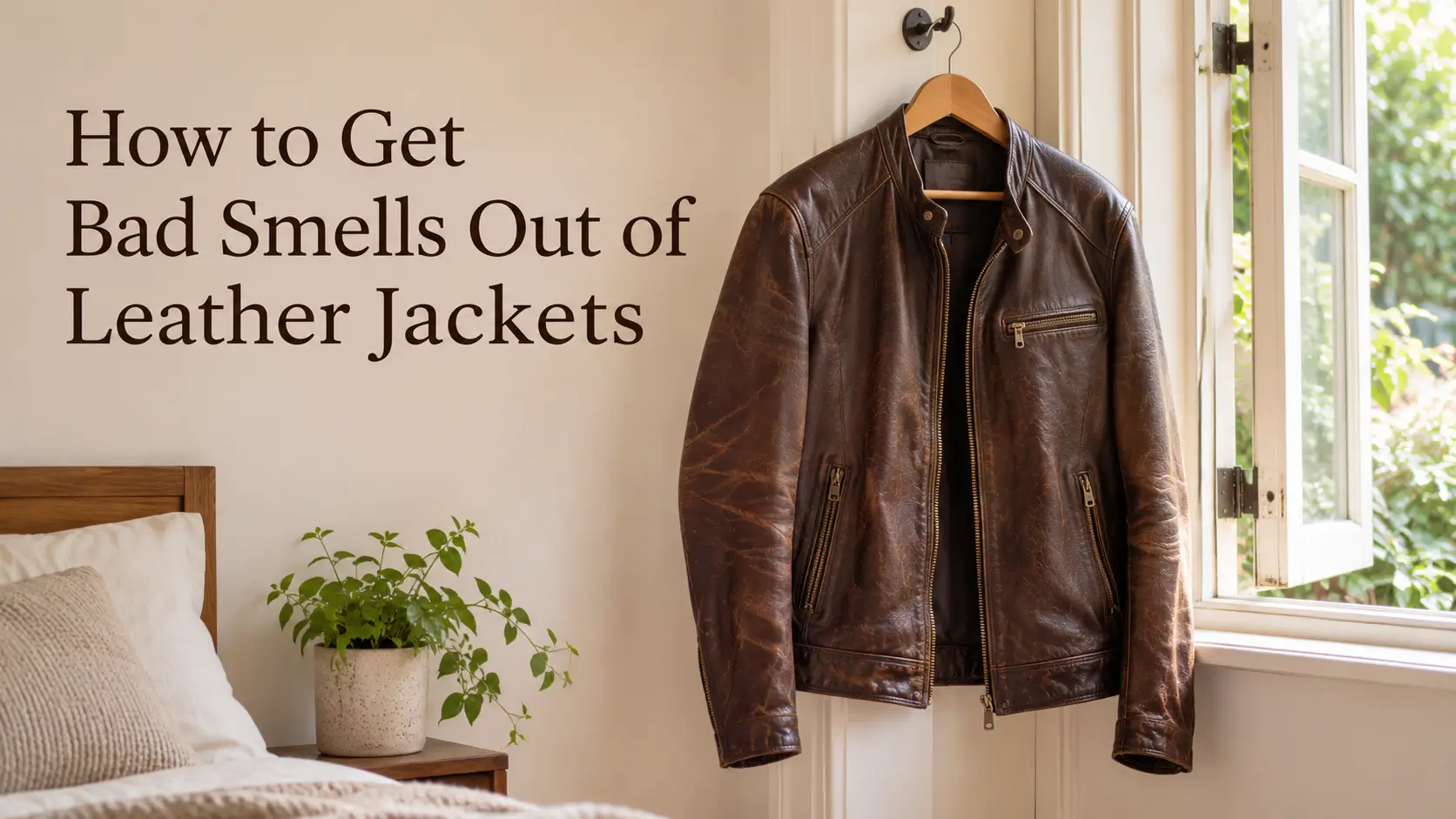
You reach for your favorite leather jacket, put it on, and notice a smell you don’t remember. Maybe it’s the smoky evening out, a little sweat in the lining, or the musty wardrobe where it spent the summer.
Before you reach for a washing machine or a bottle of perfume, take a breath. Learning how to get bad smells out of leather jackets starts with finding where the odor is coming from and choosing a method that won’t damage the leather.
This guide walks you through safe steps for freshening your jacket, knowing when to call a specialist, and preventing the smell from returning.
Quick Answer: How Do You Remove Odors From a Leather Jacket?
To freshen a leather jacket, hang it on a wide hanger in a dry, well-ventilated place away from direct sunlight and heat. Check whether the smell comes from the leather or the lining, and follow the garment’s care label before cleaning either area. For stubborn smells, visible mold, or delicate materials such as suede and shearling, consult a professional leather cleaner.
Why Does My Leather Jacket Smell Bad?
Leather jackets can pick up odors from everyday wear, storage, and their surroundings. Before cleaning, take a moment to identify the source. Treating the wrong part of the jacket may waste time or damage an otherwise clean finish.
Common causes include:
· Sweat and body oils: These often collect in the lining, especially around the underarms and collar.
· Smoke: Cigarette smoke, cooking smoke, or a bonfire can leave a lingering smell on both the shell and lining.
· Damp storage: A jacket put away before it is fully dry may develop a musty odor.
· Food or drink spills: Even a small spill can leave a smell if it reaches the lining.
· A new leather smell: Genuine leather has a natural scent, although a strong chemical or fishy odor may need attention from the seller or a specialist.
A faint leather scent is normal. A sour, musty, or increasingly unpleasant smell deserves a closer look.
Before You Start: Check the Label and Leather Type
The care label is your first stop. It may identify the outer material, lining, and any cleaning restrictions. If it says professional leather clean only, follow that advice.
Leather finishes react differently to moisture and cleaning products:
· Finished smooth leather often has a protective surface, but it can still stain or lose color.
· Suede and nubuck have a soft, textured surface that can mark easily.
· Shearling combines leather or suede with a wool surface and needs specialist care.
· Faux leather is made differently from genuine leather and may have its own cleaning instructions.
Not sure what you have? Contact the retailer or a leather-cleaning specialist before applying a product. If your jacket is new and the smell seems unusually strong, ask the seller for advice before treating it; check the return policy first.
Leather Jacket Odor Removal: Choose the Right Method
Method | Best for | Advantage | Limitation |
Airing in a dry, shaded space | Light odors and general freshness | Gentle and easy to try first | Strong or deep odors may remain |
Cleaning the lining as directed | Sweat or odor concentrated in fabric | Targets the area closest to the skin | Requires care to keep leather from getting wet |
Suitable leather cleaner | Surface dirt on compatible smooth leather | Designed for specific leather finishes | May not remove odors inside the lining |
Odor absorber nearby | Mild lingering smells after airing | No direct contact with the jacket | Results vary; it won’t fix mold or heavy contamination |
Professional leather cleaning | Persistent odors, visible mold, suede, or valuable jackets | Treatment can be tailored to the garment | Costs more and takes longer |
For most jackets, airing is the best first step. Move on to cleaning only after checking the care label and identifying the material.
Step 1: Find Where the Smell Is Coming From
Open the jacket and check the collar, underarms, cuffs, pockets, and lining. Then check the outside.
If the underarms smell stronger than the leather, sweat in the lining is likely the main issue. If the entire jacket smells smoky, both the outer surface and lining may have absorbed the odor.
Also look for discoloration, damp patches, fuzzy spots, or a smell that returns after the jacket dries. These can indicate a more serious problem. If you see possible mold, keep the jacket away from other clothing and contact a leather-cleaning specialist.
Example: You wore your jacket to dinner and now the underarm lining smells slightly sour. Airing it and following the lining’s care instructions may be enough. There’s no reason to clean the whole leather shell first.
Step 2: Air Out Your Leather Jacket
Fresh air is a gentle starting point for many light odors.
1. Place the jacket on a wide, supportive hanger to help it keep its shape.
2. Leave it open so air can reach the lining.
3. Hang it in a dry, well-ventilated room, away from direct sunlight, radiators, and heaters.
4. Leave it for several hours or overnight, then check the smell.
5. If the lining needs more air, gently turn the jacket inside out if its construction allows it without straining the seams.
A sheltered outdoor area can also work when the weather is dry and the jacket stays out of direct sunlight. Bring it inside if the air becomes damp.
Pros: Airing is simple, inexpensive, and doesn’t involve applying anything to the leather.
Cons: It takes time and may not remove heavy smoke, old spills, or an odor embedded deep in the lining.
Avoid using a hairdryer to speed things up. Leather care guidance recommends natural drying away from direct heat and sunlight, which can damage the material.
Step 3: Freshen the Lining Carefully
The lining often holds the strongest smell because it sits closest to your body. Before you treat it, check whether the label allows spot cleaning and what the lining is made from.
How to Remove Sweat Smell From a Leather Jacket Lining
If the label permits spot cleaning:
1. Turn the jacket inside out carefully, or pull the lining away from the leather where possible.
2. Check the label for a suitable cleaning method.
3. Test any recommended fabric-cleaning product on a hidden section of lining first.
4. Clean only the affected fabric, following the product directions. Avoid soaking it or allowing moisture to reach the leather.
5. Leave the jacket open in a ventilated place until the lining is completely dry.
If the lining is silk, delicate, heavily stained, or cannot be separated from the leather, ask a specialist to clean it.
A removable lining is easier to manage: follow its own care label, which may differ from the instructions for the jacket.
Example: After wearing a jacket on your daily commute, you notice odor only at the collar. A careful spot treatment of that area may be more appropriate than cleaning the entire jacket.
Can You Use Baking Soda or Charcoal?
Some people place an odor absorber near a jacket after airing it. If you choose to try this, put a secure pouch of activated charcoal or baking soda nearby, keeping it separate from the jacket and allowing airflow around the garment.
Do not pour loose powder onto leather, suede, or into the lining. Powder can be difficult to remove from seams and textured surfaces. Results are also unpredictable: an absorber may help with a mild lingering smell, but it is not a substitute for cleaning the source of an odor.
Step 4: Clean the Leather Surface Only If Needed
If the outside is dirty or smells smoky, check whether your care label permits cleaning and use a product specifically suitable for your jacket’s leather and finish.
For compatible finished leather:
1. Dust the surface gently with a clean, soft cloth.
2. Apply a small amount of the recommended cleaner to a cloth, following its instructions.
3. Test it on an inconspicuous area and allow the test spot to dry. Check for color transfer, darkening, or a change in finish.
4. If the test is successful, clean gently as directed. Avoid saturating the leather.
5. Let the jacket dry naturally before wearing or storing it.
A hidden-area test is especially important on colored or delicate leather.
A leather conditioner is not an odor remover. It may be appropriate after cleaning if the jacket manufacturer recommends it, but the wrong conditioner can change the look or feel of the finish. Never assume a smooth-leather cream is suitable for suede.
Looking for a jacket that suits your everyday wardrobe? Explore our best womens leather jacket collection and check the material and care information before choosing your style.
How to Get Smoke Smell Out of a Leather Jacket
Smoke can settle into the outer leather and fabric lining, so start with an airing in a dry, shaded, well-ventilated space. Open the jacket and give both sides time to breathe.
Afterward, check the collar and lining. If the smell is still noticeable, follow the care label for any permitted spot cleaning. A compatible leather cleaner may help with surface residue, but it may not reach smoke trapped deep inside the garment.
For heavy smoke or a smell that remains after careful airing and cleaning, contact a professional leather cleaner. Tell them what caused the odor and how long it has been there.
Real-life example: Your jacket smells lightly of smoke after a few hours around a bonfire. Air it overnight and reassess it the next day. If it still smells strongly, a specialist can advise whether deeper treatment is worthwhile.
How to Remove a Musty Smell From a Leather Jacket
A musty smell often points to damp storage. First, move the jacket to a dry, ventilated area and inspect it closely, including the seams, pockets, and lining.
If the jacket is slightly damp but has no visible mold, let it dry naturally on a supportive hanger away from direct heat. Once dry, check whether the odor remains.
If you see fuzzy growth, spreading spots, or staining that looks like mold, avoid brushing or treating it with household chemicals. Keep the jacket separate from your other clothes and contact a leather-care professional. A musty smell that returns after drying also needs further attention.
The Canadian Conservation Institute provides specialist guidance on mold and leather, including advice on separating affected items and careful drying. See external links below.
Before returning the jacket to your wardrobe, check the storage area for dampness too. Otherwise, the smell may return.
What About Suede, Nubuck, and Shearling Jackets?
These materials need extra care because their surfaces can react visibly to moisture and ordinary leather products.
For a mild odor, begin by airing the jacket in a dry, shaded area. Follow the manufacturer’s instructions for any further care. If the smell is strong, the jacket has visible staining, or you suspect mold, use a specialist who handles that material.
You may have wondered, “Why does suede change color when you touch it?” Usually, touching suede changes the direction of its short surface fibers, or nap, making the area appear lighter or darker. That normal change is different from a stain or damage.
Avoid smooth-leather creams, household sprays, and vigorous scrubbing on suede unless the manufacturer specifically recommends a product for that finish.
Common Mistakes That Can Damage Your Jacket
When you want an odor gone quickly, it’s tempting to try whatever is already under the kitchen sink. These shortcuts can create a bigger problem:
1. Putting the Jacket in the Washing Machine
Unless the garment’s label explicitly permits machine washing, don’t put it in the washer or tumble dryer. Excess water and agitation can affect the leather, shape, and finish.
2. Using Perfume to Cover the Smell
Perfume and strongly scented sprays may leave you with a mixture of fragrance and odor. They can also mark some finishes. Find and treat the source first.
3. Applying Vinegar, Alcohol, or Household Cleaners
Online remedies can sound convenient, but an untested liquid may discolor or dry out leather. Use only a product suitable for the material and recommended by the garment maker or a specialist.
4. Drying It With Heat
A radiator, hairdryer, or strong sun can dry a jacket unevenly and affect its appearance or shape. Let it dry naturally instead.
5. Storing It Before It Is Dry
Even if the outside feels dry, the lining or seams may still hold moisture. Give the jacket enough time to dry completely before putting it away.
When Should You Use a Professional Leather Cleaner?
Home care is useful for light odors, but it has limits. Contact a leather-cleaning specialist if:
· You see possible mold or mildew.
· The odor returns after the jacket has dried and aired.
· Smoke, oil, food, or another substance has penetrated deeply.
· The jacket is suede, nubuck, shearling, vintage, or particularly valuable.
· The care label says professional cleaning only.
· You’re unsure what caused the smell or what treatment is safe.
Ask whether the cleaner handles leather garments, not just ordinary dry cleaning. Explain the odor, identify any stains, and mention any products you have already applied. Request a quote and ask what results are realistic before proceeding.
How to Keep a Leather Jacket Smelling Fresh
A few small habits can make a noticeable difference:
1. Air it after wearing. Leave it open for a while before returning it to a crowded wardrobe.
2. Let it dry naturally. If caught in rain, blot excess moisture gently and hang it away from heat.
3. Use a supportive hanger. A wide hanger helps the shoulders hold their shape.
4. Choose breathable storage. Keep the jacket in a cool, dry place with room for air to circulate.
5. Avoid long-term plastic covers. Trapped moisture can contribute to musty smells.
6. Deal with spills promptly. Blot gently and check the care label before attempting further treatment.
7. Check stored jackets occasionally. Look for dampness, unusual odors, and changes in the lining.
For a broader routine, see our leather jacket care guide. It can cover cleaning, conditioning, and storage in more detail.
Buying Guide: What to Look for in Your Next Jacket
A well-chosen jacket should fit your lifestyle as well as your wardrobe. Before you buy, look beyond the color and style:
· Check the material. Smooth leather, suede, and faux leather have different care needs.
· Look at the lining. A comfortable lining makes a difference if you wear the jacket often. Check whether it is removable and how it should be cleaned.
· Read the care instructions. Make sure you are comfortable with the recommended maintenance.
· Consider your climate. If you live somewhere warm or humid, choose a jacket you can comfortably wear and store in a dry, airy place.
· Choose the right fit. A jacket that allows room for your usual layers can feel more comfortable during regular wear.
· Ask questions before ordering. If the material or finish isn’t clear, contact the seller for details.
A leather jacket is a piece you can reach for season after season. Browse our latest mens leather jacket collection to find a style that works for you.
Give Your Leather Jacket a Fresh Start
A bad smell doesn’t have to mean the end of your favorite jacket. Start by finding the source, give the garment time to air, and follow its care label before using any cleaner. For persistent odors or signs of mold, a leather specialist can help you choose the right treatment.
Ready to find a jacket you’ll enjoy wearing for years? Shop our top biker leather jackets collection and choose a style that feels like you.
Frequently Asked Questions
How can I remove a bad smell from a leather jacket without washing it?
Hang the jacket open in a dry, well-ventilated place away from direct sunlight and heat. Check whether the odor comes from the lining or leather, then follow the care label for any permitted cleaning. If the smell persists, consult a leather-cleaning specialist.
Can I put baking soda directly on a leather jacket?
It’s better to keep loose baking soda off the leather and lining, where powder can collect in seams or textured surfaces. If you want to try an odor absorber, place a secure pouch nearby without it touching the jacket. Results vary, and it won’t treat mold.
How do I get sweat smell out of a leather jacket?
Check the underarms, collar, and lining first. Air the jacket, then spot-clean the affected lining only if its care label allows it. Keep moisture away from the leather and let the lining dry completely. For delicate or heavily affected linings, use a specialist.
Why does my leather jacket still smell musty after airing?
The lining or seams may still be damp, the storage area may have a moisture problem, or the jacket may need specialist cleaning. Check for visible growth or staining. If the smell returns after the jacket is fully dry, contact a leather-cleaning professional.
Can I use vinegar to remove odors from leather?
Vinegar can affect some leather finishes, so avoid applying it unless the jacket manufacturer or a leather specialist specifically recommends it. Start with airing and use cleaning products designed for your jacket’s material.
Keep reading
All articles
Why Suede Changes Color When You Touch It
You run your hand across your new suede jacket, and suddenly a dark streak appears. You brush it the other way, and the color seems to change again. Did you damage the leather? Usually, no. If you’ve…
Read article
How to Get Scratches Out of Leather Easily: A Practical Guide
You put on your favourite leather jacket, catch the sleeve against a door, and suddenly notice a pale scratch across it. Before reaching for a cleaning product, take a closer look: the right…
Read article
How to Clean a White Leather Jacket Safely
A white leather jacket can make even a simple outfit look polished. But one mark on the collar, a splash of coffee, or colour from a dark handbag can leave you wondering whether you’ll ever get it…
Read article