
How to Get Wrinkles Out of Leather Jackets Safely
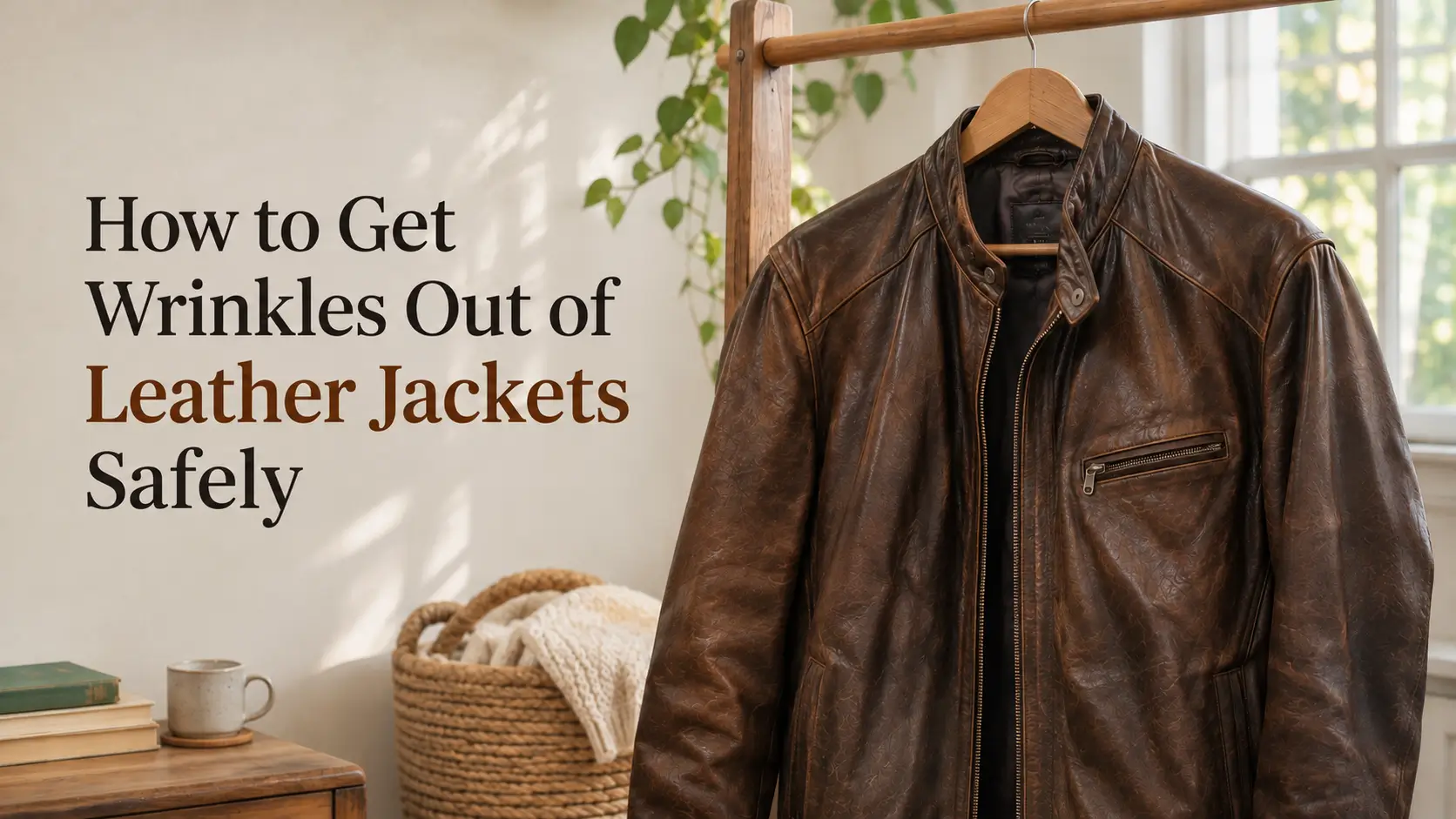
You’ve unpacked your new leather jacket, slipped it on, and noticed a stubborn crease across the sleeve. Or perhaps your favourite jacket has spent the summer folded away and now looks a little worse for wear.
If you’re wondering how to get wrinkles out of leather jackets without damaging the finish, start with patience—not heat. In this guide, you’ll learn which methods are safest, when to call a professional, and how to prevent those creases from coming back.
Quick Answer: How Do You Remove Wrinkles From a Leather Jacket?
Hang the jacket on a broad, padded hanger in a cool, dry room, away from direct sunlight and heat. Gently smooth the creased areas with clean hands, then give the leather time to relax. Wearing the jacket may also soften light wrinkles. For deep creases, delicate finishes or valuable jackets, consult a leather-care specialist.
Some creases can take several days to improve, and deeply set folds may not disappear completely. Always check the manufacturer’s care label first.
Why Do Leather Jackets Get Wrinkled?
Leather is flexible, but it can hold a crease when it stays folded or compressed for a long time. Common causes include:
• Shipping: A jacket may arrive with temporary folds from its packaging.
• Storage: Folding a jacket or squeezing it between other clothes can create creases.
• Everyday wear: Bending your arms naturally creates lines around the elbows.
• Poor hangers: Thin wire hangers can distort the shoulders and leave marks.
• Dryness or age: Dry leather may feel stiff and be less willing to relax.
Not every line is a problem. Natural grain and soft creases give leather character. The goal is to reduce unwanted folds without trying to make the material look perfectly flat.
Before You Start: Check Your Jacket’s Material
The safest way to remove wrinkles depends on the leather and its finish. Check the care label and product description before choosing a method.
Material | How to recognise it | Safest starting point |
Finished smooth leather | A smooth surface, often with a protective finish | Hang on a broad hanger and gently reshape |
Lambskin | Usually soft, lightweight and supple | Hang carefully; avoid rubbing or stretching |
Suede or nubuck | A soft, brushed or velvety surface | Hang and keep dry; consult a specialist for deep creases |
Faux leather | A synthetic material, often with a coated surface | Follow the care label; hang away from heat |
Vintage or delicate leather | May have fragile finishes, dryness or cracking | Seek advice from a leather-care specialist |
If you’re unsure which material you have, contact the retailer or a leather specialist before applying a product or using heat.
How to Get Wrinkles Out of Leather Jackets: 3 Safer Methods
1. Hang the Jacket and Let Gravity Work
Hanging is the best first step for most light wrinkles, especially after shipping or short-term storage.
1. Choose a broad, padded or shaped hanger that supports the shoulders.
2. Close the zip or buttons enough to help the jacket keep its shape.
3. Hang it in a cool, dry room with good airflow.
4. Leave space around the jacket so other clothes don’t press against it.
5. Check the crease after a day or two. Deeper folds may need more time.
Use clean hands to smooth the leather gently, following the shape of the panel. Don’t tug hard at the sleeves or pull the jacket downward; that can stretch or distort it.
Best for: Light shipping creases and wrinkles caused by short-term storage.
Pros: Simple, low risk and doesn’t require products.
Cons: It takes time and may not remove deep or old folds.
2. Wear the Jacket
Sometimes the most enjoyable solution is simply to put the jacket on.
As you move, the leather flexes around your body. Light creases may become less noticeable with normal wear, and the jacket can gradually feel more comfortable.
Try wearing it for a few hours at a time, then return it to a suitable hanger. Avoid forcing stiff areas to bend or trying to stretch a crease out by hand.
Best for: Minor wrinkles and new jackets that need time to settle.
Pros: Easy and helps you enjoy the jacket while it softens naturally.
Cons: Wearing alone may not improve deep storage creases. It will also create natural movement lines, particularly at the elbows.
Shopping for a jacket you’ll reach for regularly? Explore our leather jackets and choose a style that suits your everyday wardrobe.
3. Ask a Leather-Care Specialist About Stubborn Creases
If hanging and normal wear don’t help, a specialist can assess the leather before recommending treatment. This is especially useful when a jacket is expensive, vintage, heavily creased or has an unusual finish.
A professional can also tell you whether a line is a removable storage fold or a permanent change in the leather. Results vary, so ask about likely improvement before agreeing to treatment.
Best for: Deep folds, fragile leather, suede and jackets with sentimental value.
Pros: Treatment can be matched to the material and condition.
Cons: It costs more and may require several days or longer, depending on the cleaner.
Look for a cleaner who specifically handles leather garments, rather than assuming every dry cleaner offers the same service.
Should You Use Steam on a Leather Jacket?
The safest choice is to avoid steaming your leather jacket at home unless the manufacturer explicitly recommends it.
Heat and moisture can affect leather differently depending on the finish. They may leave water marks, alter the surface or make the leather stiff as it dries. Suede, nubuck and delicate leather are particularly unsuitable for DIY steam treatments.
You may see advice suggesting a steamy bathroom, but results are unpredictable and humidity can affect the jacket. Start with hanging instead. If the crease remains, ask a specialist.
If your jacket gets wet in the rain, gently blot it with a clean cloth and let it air-dry naturally on a suitable hanger. Keep it away from radiators, hair dryers and direct sunlight.
How to Iron a Leather Jacket: Is It Safe?
If you’re searching for how to iron a leather jacket, the answer is to check the care label first. Do not iron the jacket directly, and don’t assume the lowest setting on your iron is safe for every leather finish.
For most owners, a leather-care specialist is the better choice for a crease that won’t hang out. Heat damage or a shiny patch can be much harder to correct than the original wrinkle.
Never use steam or a hot iron directly on leather. If your jacket’s manufacturer provides a specific pressing method, follow its instructions for that exact garment.
Real-Life Examples: Which Method Should You Choose?
A New Jacket Arrives With Fold Marks
You ordered a leather biker jacket online, and it arrived neatly packed in a box. There’s a crease across the back where it was folded.
Place it on a broad hanger as soon as you unpack it. Leave it in a dry room with space around it, then wear it normally once the jacket has had time to settle. A fresh shipping crease may gradually soften, although the result depends on the leather.
A Jacket Has Been Folded Away All Summer
You take your favourite jacket out of a storage box and find deep folds across the front.
Hang it up and give it several days. If the folds remain prominent, particularly if the leather feels dry or stiff, ask a leather specialist to assess it. Avoid adding heat just because the crease is taking longer than expected.
A Suede Jacket Looks Darker Where You Touched It
You brush your hand over a suede sleeve, and the colour appears to change. This is often normal: touching suede moves the tiny surface fibres, known as the nap, so they reflect light differently.
Once the jacket is dry, use a suede brush gently and follow the manufacturer’s guidance. A persistent patch, stain or damaged area may need specialist attention.
Keep Your Jacket Looking Its Best
Wrinkle prevention starts with a few simple habits. The right routine also helps you spot dirt and damage before they become harder to handle.
Store It on the Right Hanger
Use a hanger wide enough to support the shoulders without stretching them. A padded or shaped hanger helps the jacket keep its form.
Avoid folding your jacket for long periods. If you need to pack it for travel, unpack and hang it as soon as you arrive.
Give It Space to Breathe
Store your jacket in a dry, well-ventilated wardrobe. A breathable garment cover can help protect it from dust during longer storage.
Condition Only When Appropriate
Some finished smooth leathers benefit from a conditioner, but not every jacket needs the same product or frequency. Check the manufacturer’s advice, choose a product intended for your leather type, and test it on a hidden area first.
Use a small amount as directed. Conditioner may change the appearance or colour of some finishes, and it won’t guarantee that a deep crease disappears.
Do not use a smooth-leather conditioner on suede or nubuck unless the jacket manufacturer specifically says it is suitable.
Keep It Away From Heat
Radiators, hair dryers and prolonged direct sunlight can dry or damage leather. Let a damp jacket dry naturally, and don’t rush the process.
Read More About Our Latest: Leather jacket care guide
How to Get Bad Smells Out of Leather Jackets
If your jacket smells musty after storage or has picked up an odour from a night out, start by hanging it in a dry, well-ventilated area away from direct sunlight.
Open the jacket so air can reach the lining, too. Sometimes the smell is strongest in the fabric rather than the leather itself.
Check the care label before cleaning the lining, and avoid soaking it or spraying perfume directly onto the jacket. Strong smoke smells, persistent mustiness or visible mould are best assessed by a leather-care specialist.
A breathable wardrobe and a fully dry jacket can help prevent odours from returning.
How to Clean a White Leather Jacket Without Spreading Marks
White leather looks striking, but everyday dirt and colour transfer can be more noticeable.
For light surface dust, start with a clean, dry, soft cloth. If the care label allows cleaning, use a product made for the jacket’s specific leather finish and test it in a hidden spot first.
Don’t scrub a mark aggressively. Avoid bleach, harsh household cleaners and untested stain removers: they can damage the finish or make discolouration more obvious.
For ink, dye transfer, large stains or yellowing, contact a leather specialist. Cleaning white leather requires care because even a small change in colour can stand out.
How to Get Scratches Out of Leather Easily
The right approach depends on whether you’re dealing with a light surface scuff or a deeper scratch.
For a minor mark on finished smooth leather, gently buff the area with a clean, soft cloth. If the manufacturer recommends a suitable conditioner, a small, patch-tested amount may improve the appearance of some light scuffs—but it won’t repair torn leather or restore missing colour.
Deep scratches, peeling finishes and exposed fibres need a professional assessment. Avoid shoe polish, permanent markers and household oils, which may leave a patch that is difficult to match later.
Advanced Stain Removal on Leather Jackets
For ink, grease, paint, dye transfer or a large unknown stain, resist the urge to experiment with household remedies.
First, gently blot a fresh spill with a clean, dry cloth. Don’t rub, soak the area or apply heat. Then contact a leather-cleaning specialist and explain what caused the stain, if you know.
Take a clear photo before treatment and ask whether the stain can be reduced without changing the surrounding finish. Some stains are permanent, so a specialist should discuss realistic results with you.
Common Leather Jacket Care Mistakes
Even a small shortcut can leave a lasting mark. Avoid these common mistakes:
1. Ironing directly on leather. Heat can alter the finish or leave shiny marks.
2. Using steam without manufacturer approval. Moisture and heat can affect colour and texture.
3. Hanging a wet jacket by a radiator. Fast drying may leave leather stiff or damaged.
4. Storing it folded for months. Long-term pressure can create deep creases.
5. Using the wrong conditioner. Products designed for smooth leather may damage suede.
6. Scrubbing stains. Rubbing can spread a mark or wear away the finish.
7. Ignoring the care label. Two jackets that look similar may need different treatment.
8. Expecting every crease to disappear. Leather develops natural character with wear.
Buying a Leather Jacket? Look Beyond the Style
A jacket you love wearing should also suit how you plan to care for it. Before you buy, consider:
• Leather type: Lambskin is often soft and supple; other hides may feel firmer. The finish and construction matter too.
• Fit: You should be able to move your arms comfortably. Natural lines will still develop where the leather bends.
• Care instructions: Check whether the jacket needs specialist cleaning or has a delicate finish.
• Colour: White and other light colours can make dirt and dye transfer more visible.
• Your lifestyle: If you wear a jacket often, choose a style and finish you’ll feel comfortable maintaining.
If you’re comparing everyday styles, browse our leather jacket collection to find a fit and finish that work for you.
Give Your Leather Jacket Time to Settle
Knowing how to get wrinkles out of leather jackets starts with understanding the material. For most light creases, a supportive hanger, a little space and regular wear are sensible first steps. For a deep fold or delicate finish, a leather-care specialist can help you avoid an expensive mistake.
Ready to find a jacket you’ll enjoy wearing for years? Shop our leather jacket collection and discover a style that feels like you.
Frequently Asked Questions
How long does it take for wrinkles to come out of a leather jacket?
Light wrinkles may improve after a day or two on a broad hanger, while deeper folds can take several days or longer. The result depends on the leather, its condition and how long it was folded. Some creases may remain.
Can I put a leather jacket in the dryer to remove wrinkles?
Avoid using a dryer unless the jacket’s manufacturer explicitly says it is safe. Heat and tumbling can damage or distort leather. Hang the jacket in a dry room instead, and seek professional advice for stubborn creases.
Will wearing a leather jacket remove wrinkles?
Normal wear can help some light wrinkles soften as the leather flexes with your movement. It may not remove deep storage folds, and natural creases can develop around areas such as the elbows.
Can I steam a leather jacket to remove creases?
Avoid home steaming unless the manufacturer specifically recommends it for your jacket. Heat and moisture can affect the leather’s finish or leave marks. For deep creases, consult a leather-care specialist.
Why does suede change colour when you touch it?
Suede can appear lighter or darker when touched because its tiny surface fibres move in different directions and reflect light differently. This is usually normal. Gently brushing dry suede with a suitable suede brush can help restore a more even appearance.
Keep reading
All articles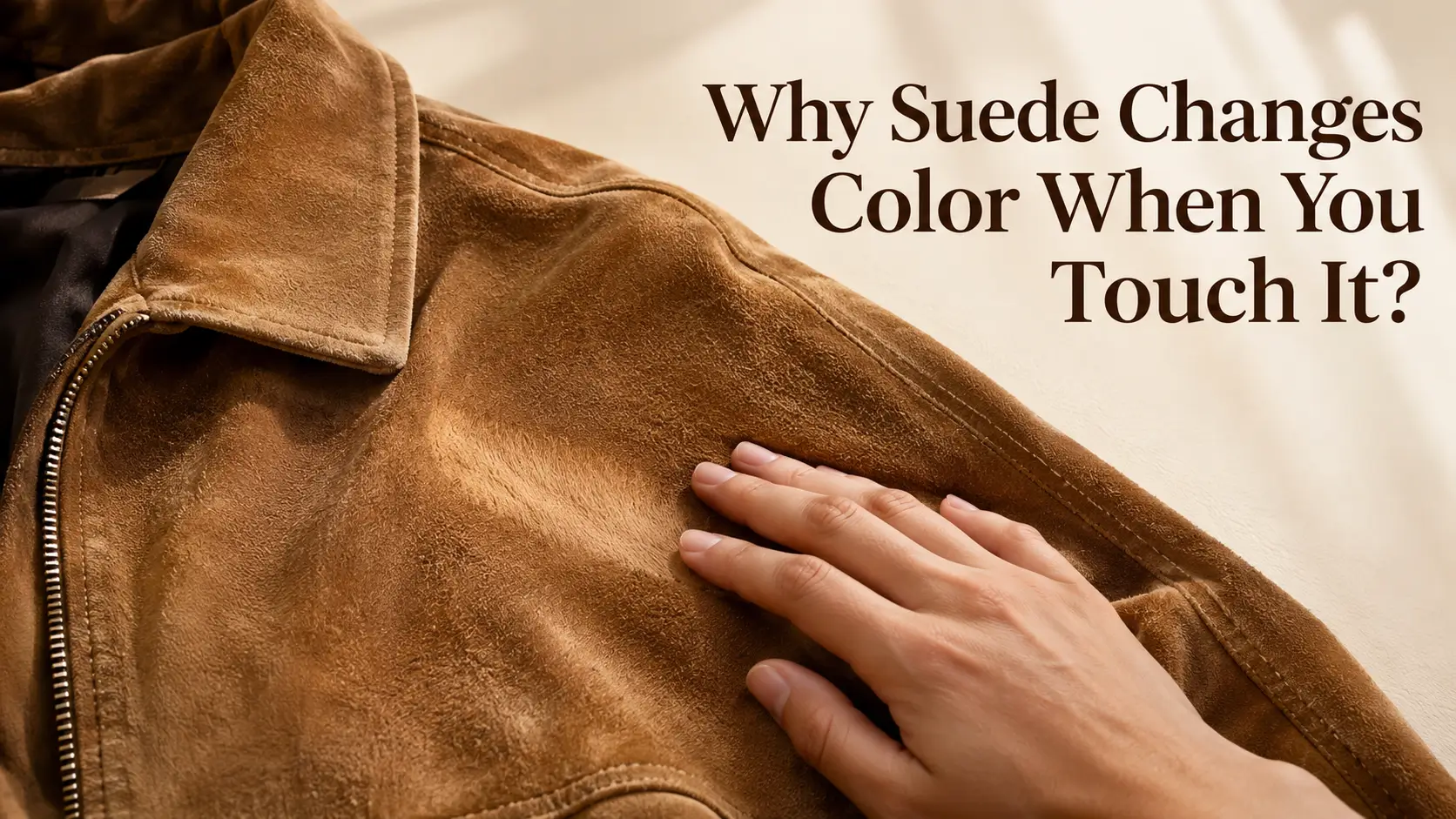
Why Suede Changes Color When You Touch It
You run your hand across your new suede jacket, and suddenly a dark streak appears. You brush it the other way, and the color seems to change again. Did you damage the leather? Usually, no. If you’ve…
Read article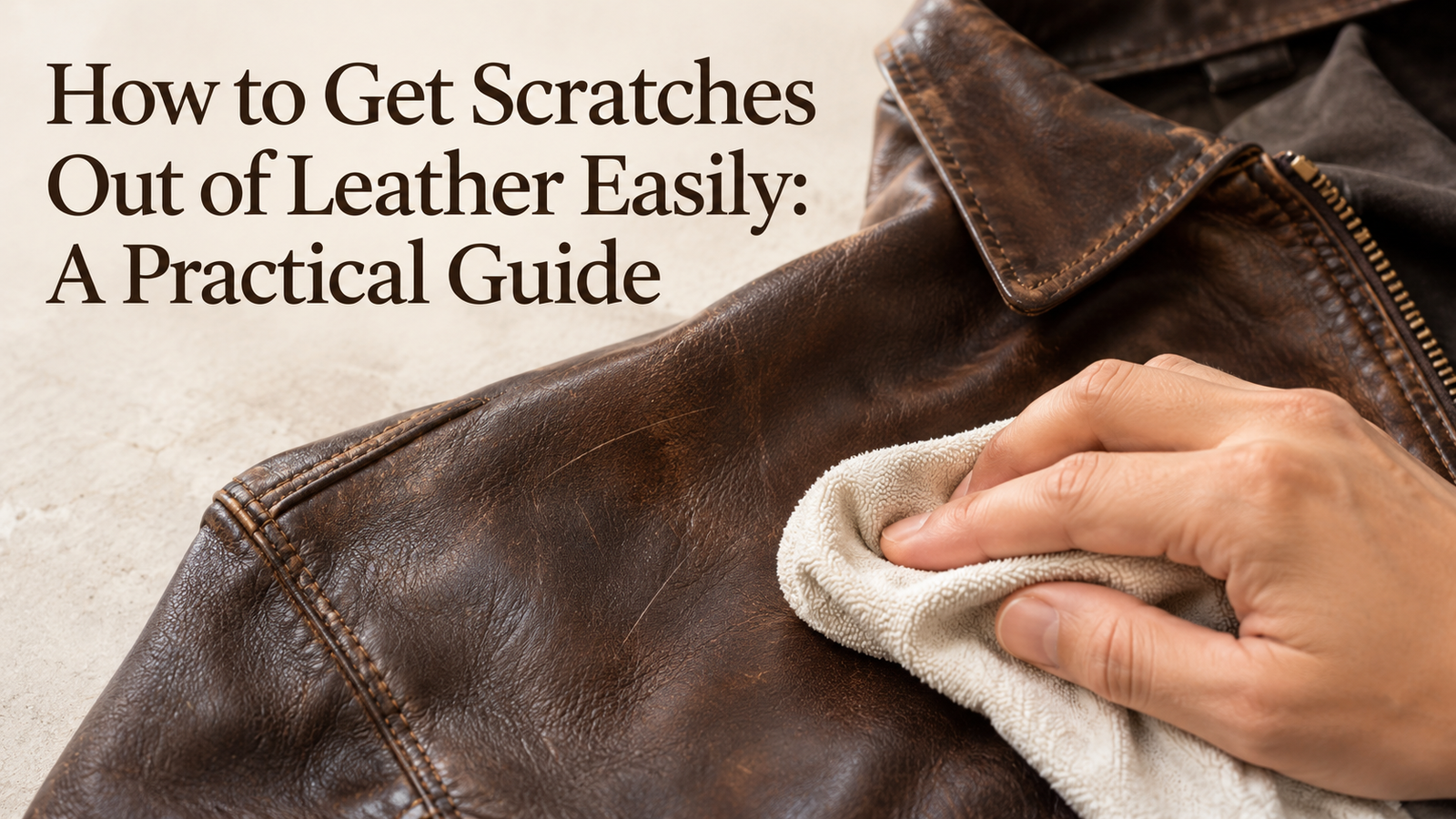
How to Get Scratches Out of Leather Easily: A Practical Guide
You put on your favourite leather jacket, catch the sleeve against a door, and suddenly notice a pale scratch across it. Before reaching for a cleaning product, take a closer look: the right…
Read article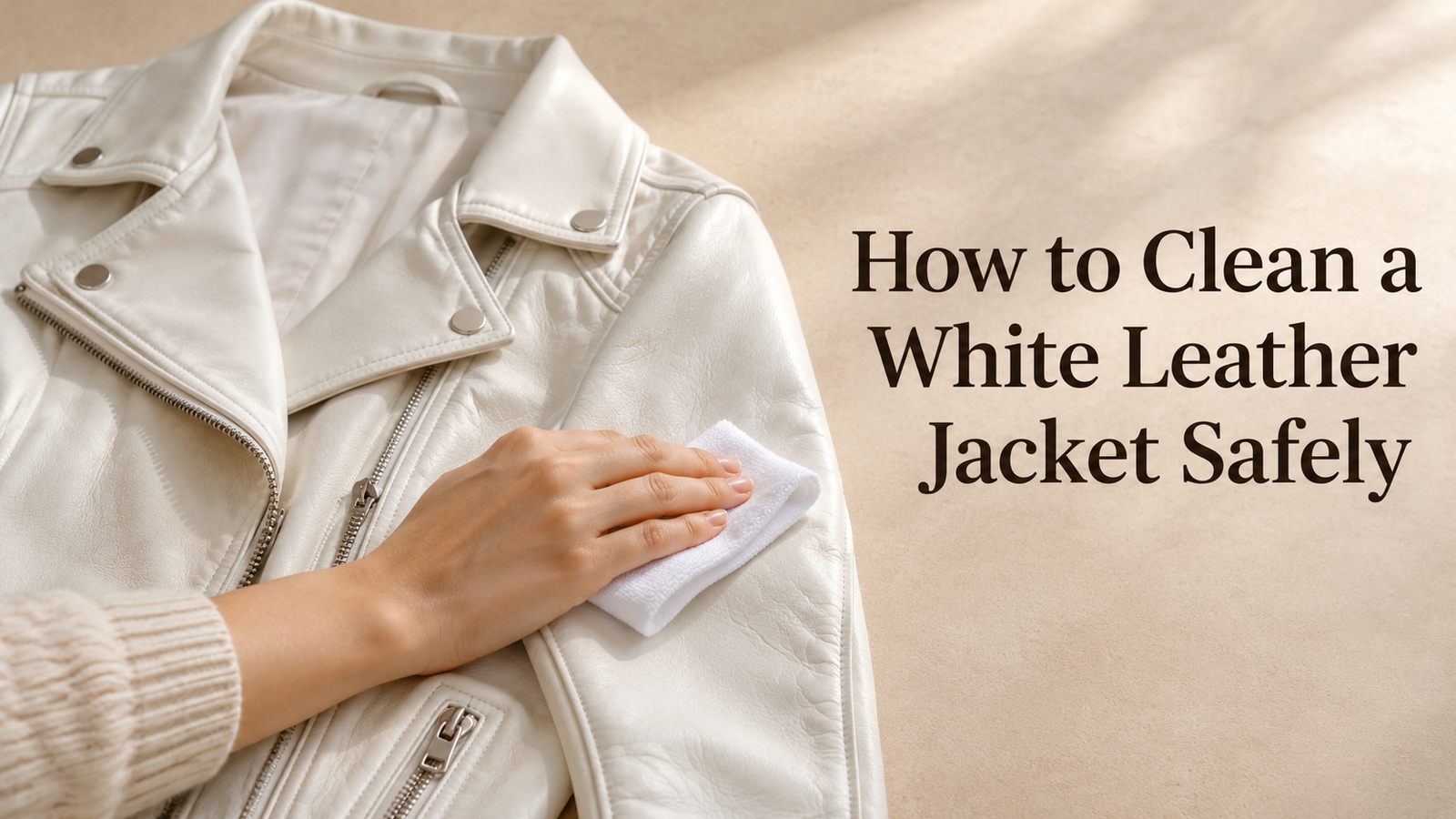
How to Clean a White Leather Jacket Safely
A white leather jacket can make even a simple outfit look polished. But one mark on the collar, a splash of coffee, or colour from a dark handbag can leave you wondering whether you’ll ever get it…
Read article