
Why Suede Changes Color When You Touch It
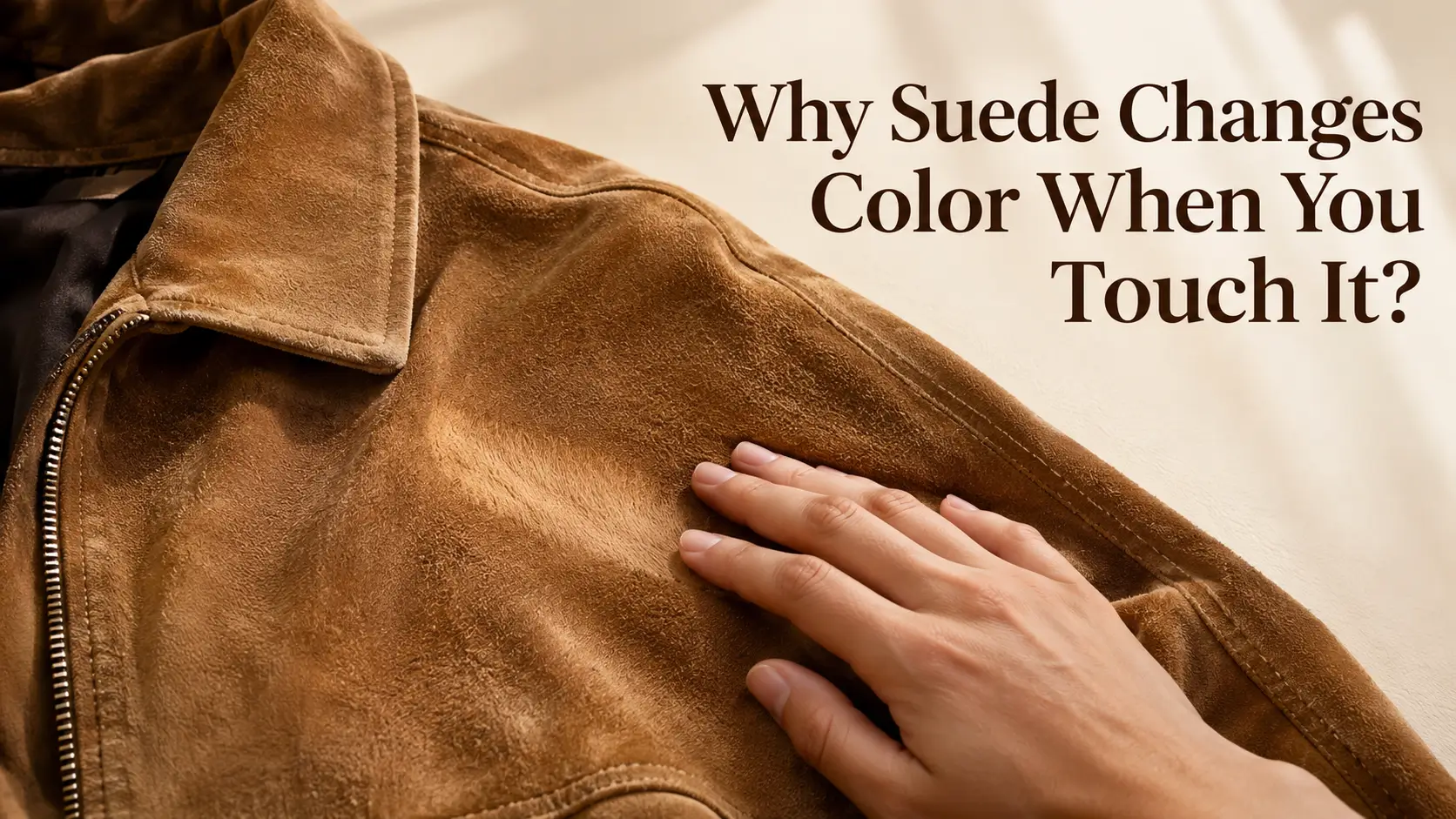
You run your hand across your new suede jacket, and suddenly a dark streak appears. You brush it the other way, and the color seems to change again. Did you damage the leather?
Usually, no. If you’ve ever wondered why suede changes color when you touch it, the answer is in its soft, velvety surface. The tiny fibers move under your hand, changing how the material reflects light.
In this guide, you’ll learn how to tell a normal touch mark from a stain, how to care for your jacket, and what to look for when buying suede.
Quick Answer: Why Does Suede Change Color When You Touch It?
Suede appears to change color when you touch it because its surface is covered in tiny raised leather fibers called the nap. Moving those fibers changes how they reflect light, making the same area look lighter or darker. The leather’s dye usually hasn’t changed, and gently brushing the fibers in one direction can create a more even appearance.
This effect is often called shading or nap variation. It is a normal characteristic of suede and part of what gives the material its soft, textured look.
What Is Suede Nap?
Suede is leather with a soft, brushed surface. That surface contains countless fine fibers, which sit at slightly different angles.
When you run your fingers across a jacket, you move those fibers. Depending on the direction of your hand and the light in the room, the area may appear darker, lighter, or slightly streaky.
Think of the way a velvet cushion changes appearance when you smooth it with your palm. The color hasn’t necessarily changed; you’re seeing the surface from a different angle.
The effect can be more noticeable on some jackets than others. Fiber length, color, lighting, and how the suede has been finished all influence its appearance. A longer, more visible nap may show hand marks more clearly than a short, fine one.
Try this simple test:
Find a clean, dry area of your jacket.
Gently stroke it in one direction with your fingertips.
Stroke the same area in the opposite direction.
Look at it from different angles and in natural light.
If the shade moves with the fibers, you’re probably seeing normal nap variation.
Is Suede Supposed to Look Different When Brushed?
Yes. A suede jacket can look slightly different when its fibers are brushed in different directions. You might also notice that one sleeve looks darker after carrying a bag or that a handprint appears after picking up the jacket.
Imagine taking your jacket off at a restaurant and placing it over the back of your chair. When you pick it up, the shoulder has a darker patch where it rested against the chair. If that patch changes when you gently smooth the fibers, it’s likely a pressure mark rather than a stain.
This is one of the reasons many people love suede: its surface has depth and character. But if you prefer a jacket that looks more uniform throughout the day, smooth leather may be a better fit for your style. Explore our top selling mens suede leather jackets.
Normal Suede Shading vs. a Stain: How to Tell
Not every dark area is caused by the nap. Moisture, oil, dirt, and fading can also change the appearance of suede.
What you notice | Possible cause | What to do |
A light or dark mark changes when you stroke it | Nap moving in different directions | Gently brush the dry suede in one direction |
A dark patch feels damp | Water or another liquid | Blot gently and allow it to air-dry naturally |
A fixed dark mark appeared after food or lotion touched it | Possible oil or grease stain | Blot any fresh residue and contact a suede specialist |
A pale area remains after brushing | Possible fading, wear, or dye loss | Stop brushing and ask a specialist to assess it |
A patch feels smooth, shiny, or hard | Flattened fibers, residue, or wear | Avoid scrubbing; seek specialist advice if it remains |
Color transfers onto your clothing | Possible dye transfer | Stop wearing it with light clothing and contact the seller |
A useful rule: If the mark moves when you gently change the direction of the nap, it is likely normal shading. If it stays in place, feels different, or appeared after a spill, treat it as a potential stain.
Don’t keep brushing a fixed mark in the hope that it will disappear. Too much friction can change the surface and make the area look more noticeable.
How to Make Suede Look More Even
If you want your jacket to look tidier before wearing it, you can gently arrange the nap with a suede brush. You don’t need to brush it after every touch; a little variation is normal.
Step 1: Check the care label
Start with the manufacturer’s instructions. Different finishes may need different care, and some jackets may have special treatments or mixed materials.
If the label recommends professional cleaning only, follow that guidance.
Step 2: Make sure the jacket is dry
Never brush wet suede. Moisture can make the fibers clump together, and brushing while the leather is damp may disturb the surface.
If your jacket has been caught in light rain, hang it on a broad hanger in a well-ventilated room and let it dry naturally.
Step 3: Use a soft suede brush
Choose a clean, soft brush intended for suede. Test it first on a hidden area, such as the inside of a hem, to see how the finish responds.
Use a light touch. You’re arranging the fibers and removing loose dust, not scrubbing the leather.
Step 4: Brush in one direction
Work gently across the panel in the same direction. Use short, light strokes and avoid concentrating on one spot for too long.
A consistent direction can make the surface look more even, although natural variations may still remain.
Step 5: Check the result in natural light
Look at the jacket from a few angles. Suede may still show subtle shading as the light changes—that’s part of its appearance.
Tip: Use a separate brush for very light and very dark suede when possible. This helps reduce the risk of transferring loose dirt or color between items.
What If Suede Changes Color After Getting Wet?
Wet suede often looks darker because moisture changes the appearance of the fibers. Some of that darkening may fade as the jacket dries, but water can also leave a visible mark or alter the texture.
If your suede jacket gets wet:
Blot excess moisture with a clean, dry, absorbent cloth. Don’t rub.
Hang it on a broad hanger to help it keep its shape.
Let it air-dry naturally in a ventilated room.
Keep it away from direct heat and strong sunlight.
Once completely dry, gently brush the nap if the care label permits.
Avoid radiators, hair dryers, and tumble dryers. Fast, direct heat can damage leather and affect its shape or texture.
If a water mark remains, resist the urge to soak the whole jacket to even out the color. A leather or suede cleaning specialist can assess the mark and recommend an appropriate treatment.
Can suede protector stop water marks?
A protector made specifically for suede may help repel some moisture and stains, but it won’t make every jacket waterproof. Results depend on the product, the suede, and how it is applied.
Check the jacket manufacturer’s advice first. Patch-test the spray on a hidden area, follow the product instructions, and let the jacket dry fully before wearing it. Some protectors can alter the shade or feel of suede.
How to Care for a Suede Jacket Day to Day
A few small habits can help your jacket look good without constant cleaning.
Let it breathe between wears
After wearing your jacket, hang it on a broad, supportive hanger in a dry, ventilated space. This gives moisture and everyday odors a chance to dissipate.
If you’re wondering how to get bad smells out of leather jackets, start by airing the jacket away from direct sunlight. Avoid masking odors with perfume or applying sprays unless the manufacturer says they are suitable. Persistent smoke, mildew, or strong odors are best assessed by a leather specialist.
Brush away loose dust
When the jacket is dry, use a soft suede brush occasionally to lift loose dust. Focus on areas that get more contact, such as the cuffs and collar.
You don’t need an aggressive cleaning routine. Brushing too often or too firmly can wear the fibers.
Store it properly
Give your jacket enough space in the wardrobe so that it isn’t crushed between other clothes. For longer storage, use a breathable garment cover and keep it in a cool, dry place.
Avoid sealing it in plastic for long periods, and don’t leave it in direct sunlight, where the color may fade unevenly.
Deal with spills promptly
For a fresh liquid spill, gently blot with a clean, dry cloth. Don’t rub or apply a household cleaner.
For ink, grease, dye transfer, or a large stain, contact a suede specialist. A quick DIY experiment can spread the stain or leave a permanent ring.
Looking for more care advice? Our [leather jacket care guide] can help you understand the differences between suede and smooth leather. Always follow the instructions for your jacket’s particular finish.
Common Suede Care Mistakes to Avoid
Using smooth leather conditioner
Regular leather creams, oils, and conditioners are generally made for smooth leather. On suede, they can flatten the nap, darken the surface, or leave a greasy patch.
Use a product only when it is labeled suitable for suede and approved by your jacket’s manufacturer.
Rubbing a stain hard
A dark spot can be frustrating, but scrubbing may spread the stain or wear away the fibers. Gentle blotting is a better first response to a fresh spill.
Trying every online cleaning hack
Vinegar, baking soda, detergent, and other household products are often suggested for suede. They can react differently depending on the dye and finish, so don’t assume a method that worked on someone else’s boots is safe for your jacket.
For advanced stain removal on a leather jacket, especially one made from suede, ask a specialist before applying anything.
Using heat to remove wrinkles
If you’re researching how to get wrinkles out of leather jackets or how to iron a leather jacket, be especially careful with suede. Direct heat, steam, and an iron pressed against the surface can damage the nap or leather.
Start by hanging the jacket on a broad hanger and allowing minor creases time to relax. For stubborn wrinkles, ask a leather-care professional rather than experimenting with heat.
Treating suede like white smooth leather
Advice on how to clean a white leather jacket may involve products designed for smooth leather. White or cream suede needs its own care approach because its exposed fibers can absorb moisture and show marks more easily.
Always identify the finish before choosing a cleaning method.
Suede vs. Smooth Leather: Pros and Cons
Both materials can make a beautiful jacket. The right choice depends on how you plan to wear it and how much variation you like in the finish.
Feature | Suede | Smooth leather |
Appearance | Soft, textured, and often shows natural shading | Generally smoother and more uniform |
Touch marks | Often visible as the nap moves | Usually less noticeable, depending on finish |
Everyday care | Benefits from gentle brushing and careful stain prevention | Care depends on the finish; some are easier to wipe |
Moisture | Can darken or mark when wet | Water resistance varies by leather and finish |
Style | Relaxed, soft, and textured | Can look polished, rugged, or sleek |
Stain treatment | Often needs specialist attention | Also may need specialist treatment, especially for delicate finishes |
Pros of suede
Soft texture adds depth to an outfit.
Natural shading gives each jacket character.
Works well with casual and smart-casual clothing.
Available in versatile colors such as tan, brown, black, and olive.
Cons of suede
Shows touch and pressure marks more readily.
Can be sensitive to water, oil, and stains.
Requires suede-specific care.
May not suit someone who wants a completely uniform finish.
Which should you choose? If you love a soft, textured look and don’t mind natural variation, suede is a great option. If you want a smoother surface with fewer visible hand marks, explore smooth leather styles. Browse our best women leather jacket styles and finishes.
Buying a Suede Jacket: What to Look For
A suede jacket should fit your wardrobe and your lifestyle. Before you choose one, consider these practical details.
1. Look at the jacket in different light
Product photos can look different depending on lighting and screen settings. Check several images, including close-ups, and read the product description for details about the material and finish.
Some color variation between panels and a change in shade when the nap moves may be natural. If you’re unsure about a specific jacket, ask the seller for clarification before ordering.
2. Choose a color you’ll enjoy wearing
Tan and brown suede can create a relaxed, versatile look, while black and darker shades offer a sharper appearance. Lighter colors can be beautiful but may show dirt and stains more readily.
Think about where you’ll wear your jacket. A cream suede jacket for occasional dinners has different care demands from a jacket worn daily on public transport.
3. Check the material description
Make sure you know whether you’re buying genuine suede, nubuck, or a synthetic suede-look fabric. They can look similar in photographs but may have different care requirements.
Nubuck is also a napped leather, while synthetic suede-look fabrics are not leather. Follow the care label for the exact material.
4. Consider the fit and construction
Check the size chart and compare it with your body measurements and preferred fit. Look at the shoulders, sleeve length, lining, pockets, and closure.
If you plan to wear a jumper underneath, allow enough room for comfortable layering. A jacket that fits well is one you’re more likely to reach for.
5. Read the care instructions before buying
A suede jacket doesn’t need complicated daily care, but it does need thoughtful wear. If you frequently commute in heavy rain or want a jacket you can wipe down quickly, another finish may be more practical.
Choose a jacket you like and feel comfortable caring for.
What About Scratches on Suede?
A line that looks like a scratch may simply be suede fibers lying in another direction. Before treating it, gently stroke the area with your fingertips. If the line changes or disappears, it was likely a nap mark.
If you’re searching for how to get scratches out of leather easily, remember that suede and smooth leather respond differently. A cream or balm made for a smooth leather scratch can leave a darker, flattened patch on suede.
For a deep scratch, torn surface, missing color, or mark that doesn’t respond to gentle brushing, consult a leather repair specialist. They can assess whether the jacket needs cleaning, color work, or repair.
Enjoy Your Suede Jacket With Confidence
So, why does suede change color when you touch it? Most of the time, it’s simply the nap moving and reflecting light differently. Those handprints and subtle shifts in shade are part of the material’s character.
Learn to recognize the difference between normal shading and a fixed stain, brush gently when needed, and give your jacket the care its finish requires. With the right habits, suede can be a comfortable, stylish part of your wardrobe for years.
Ready to find your next favorite jacket? Explore our womens suede leather jacket collection and choose the color and fit that feel right for you.
Shop the best mens leather jacket collection.
FAQ’s
Why does suede look darker when I touch it?
Suede can look darker when touched because your hand moves the tiny fibers on its surface, known as the nap. The fibers reflect light differently depending on their direction. If the shade changes when you stroke the area again, it is usually normal.
Is it normal for suede to have handprints?
Yes. Handprints can appear when pressure changes the direction of the nap. They are usually temporary and can often be made less noticeable by gently brushing the dry suede in one direction with a soft suede brush.
How can I tell if a mark on suede is a stain?
A normal nap mark usually changes when you gently stroke the fibers in another direction. A stain often stays in the same place and may have appeared after a spill. If the area feels sticky, hard, or greasy, ask a suede specialist to assess it.
Can water permanently change the color of suede?
Water can temporarily darken suede, but it may also leave a lasting mark or change the texture. Blot excess moisture gently and allow the item to air-dry away from heat. If a mark remains, consult a suede-cleaning specialist.
Should I use leather conditioner on a suede jacket?
Avoid using ordinary smooth-leather conditioner on suede unless the jacket manufacturer specifically recommends it. Creams and oils can flatten the nap or darken the surface. Choose products made for suede and patch-test them first.
Keep reading
All articles
How to Get Scratches Out of Leather Easily: A Practical Guide
You put on your favourite leather jacket, catch the sleeve against a door, and suddenly notice a pale scratch across it. Before reaching for a cleaning product, take a closer look: the right…
Read article
How to Clean a White Leather Jacket Safely
A white leather jacket can make even a simple outfit look polished. But one mark on the collar, a splash of coffee, or colour from a dark handbag can leave you wondering whether you’ll ever get it…
Read article
How to Get Bad Smells Out of Leather Jackets
You reach for your favorite leather jacket, put it on, and notice a smell you don’t remember. Maybe it’s the smoky evening out, a little sweat in the lining, or the musty wardrobe where it spent the…
Read article